


Project ecommerce, ecommerce, Presentations, Presentations, 3D Visualisations, 3D Visualisations, Advertisment, Advertisment
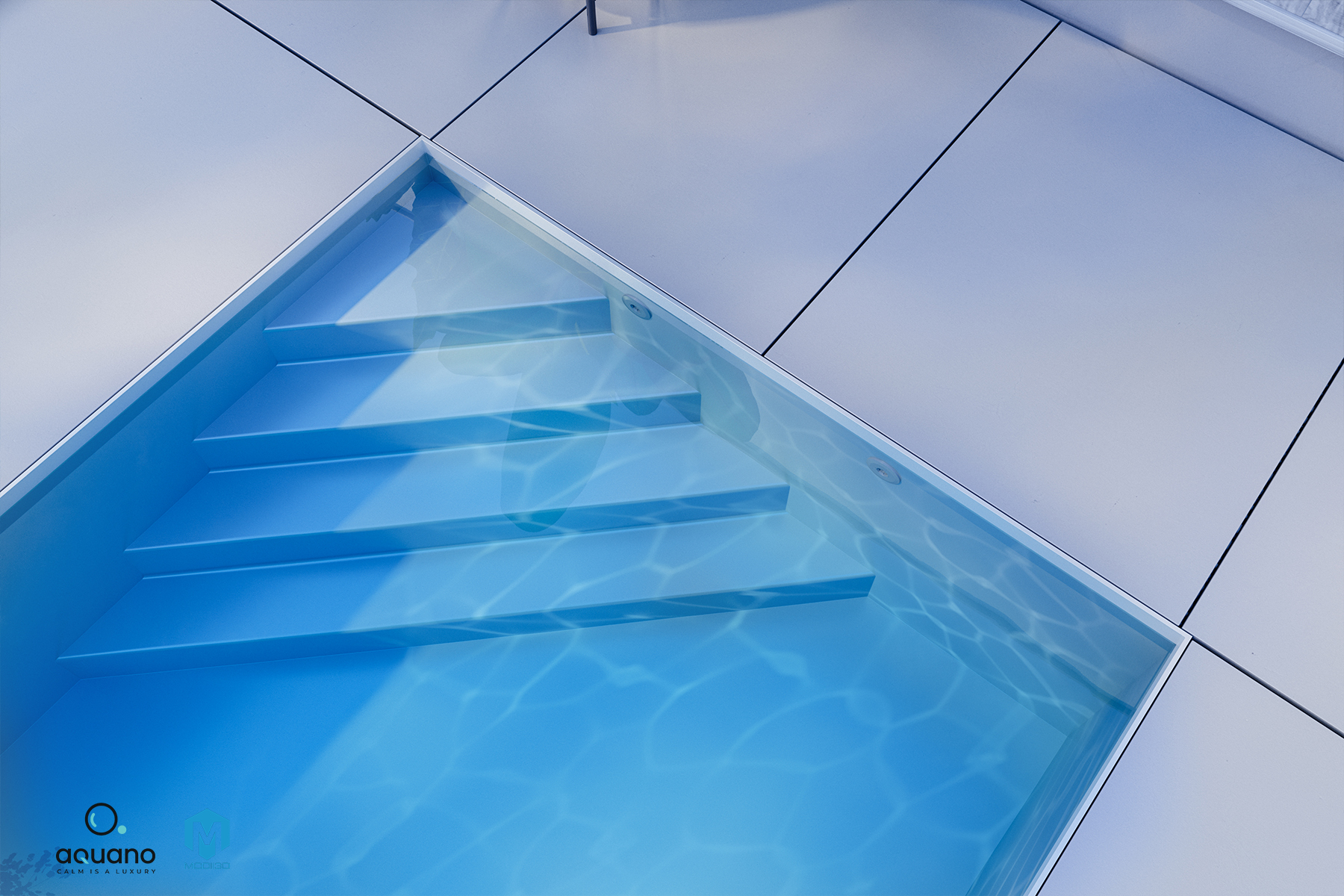
3D Visualizations of Swimming Pools – Realistic Projects for Catalogs and E-commerce
Case Study: 3D Visualizations of Swimming Pools for Aquano – Execution and CAD Documentation
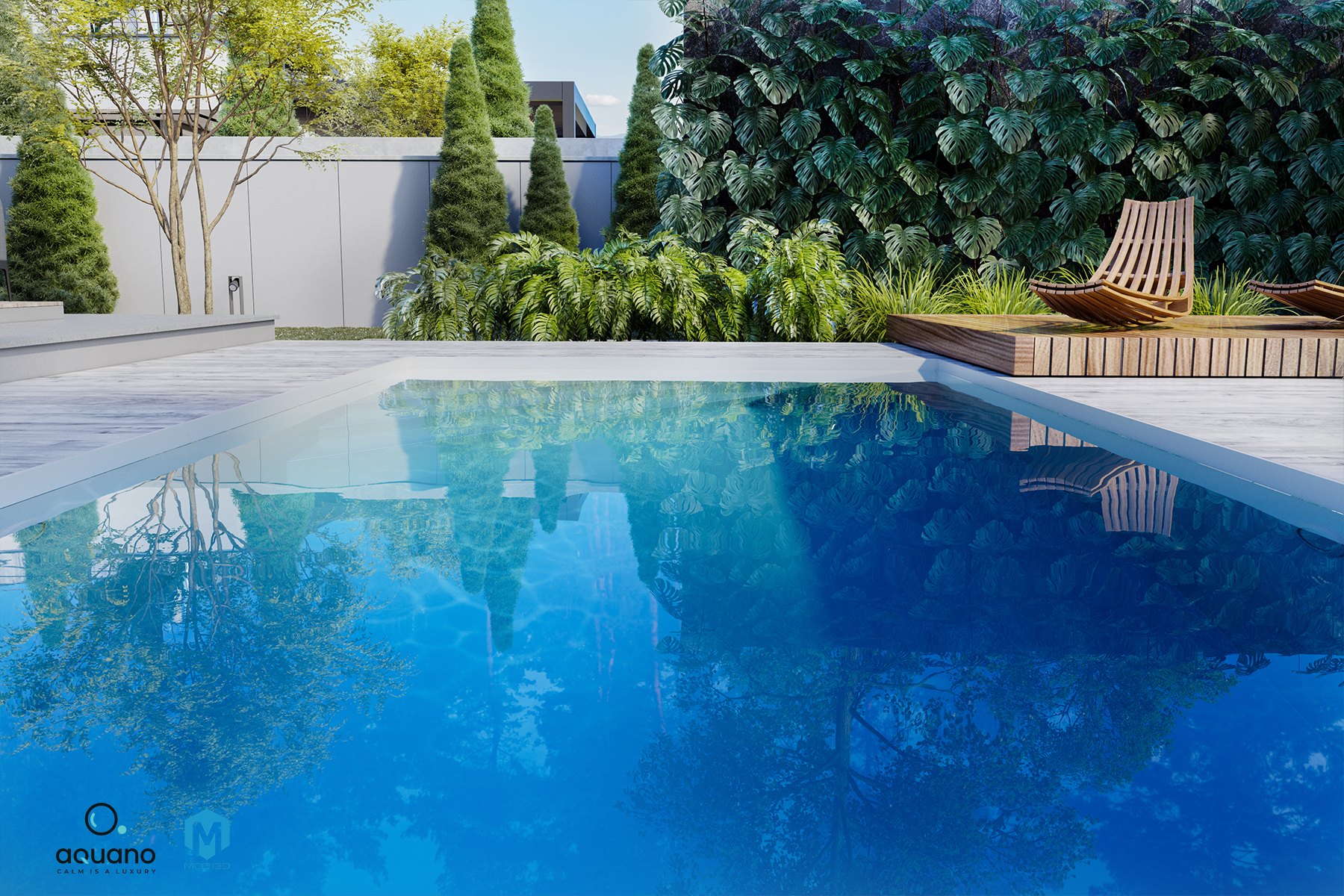
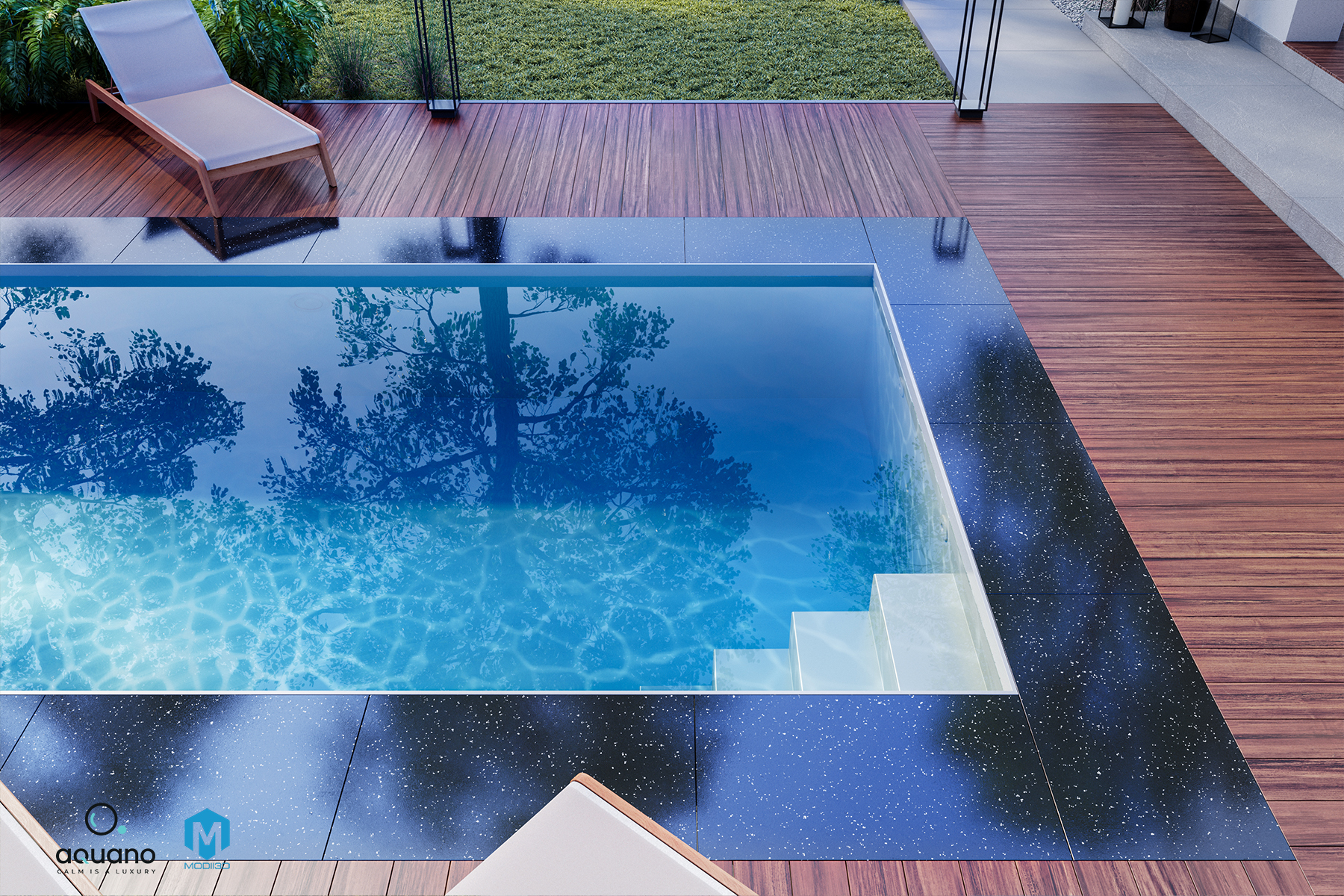
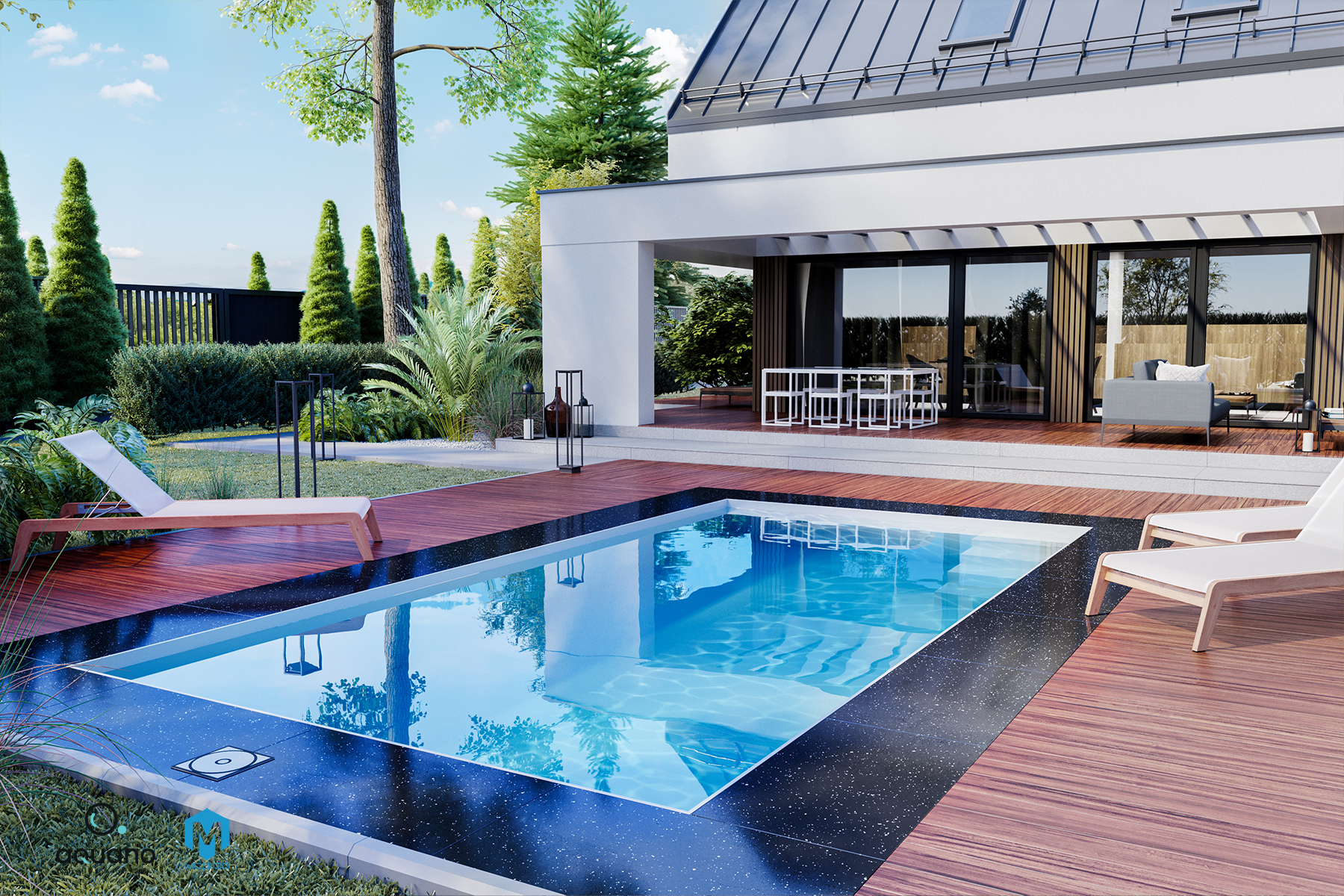
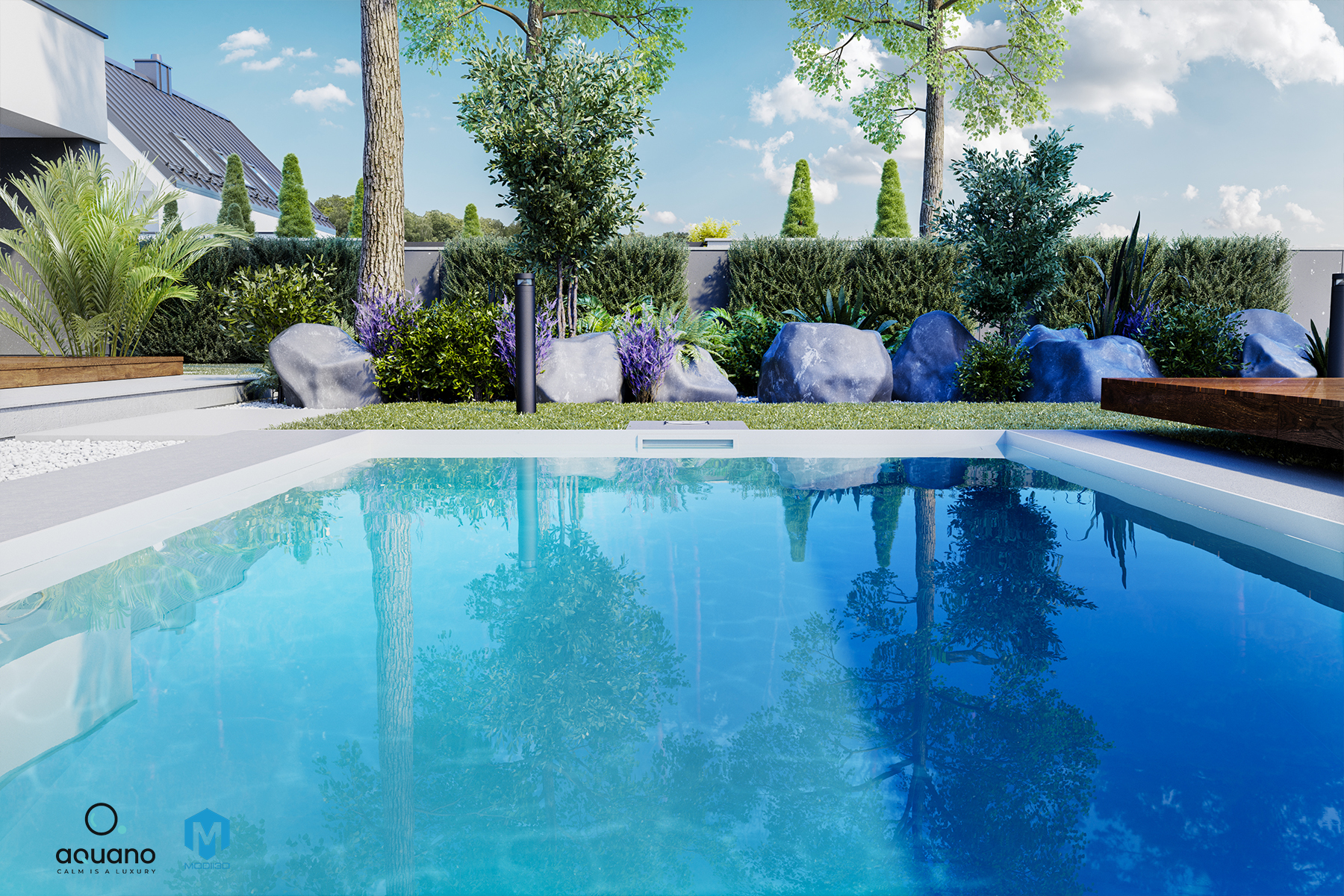
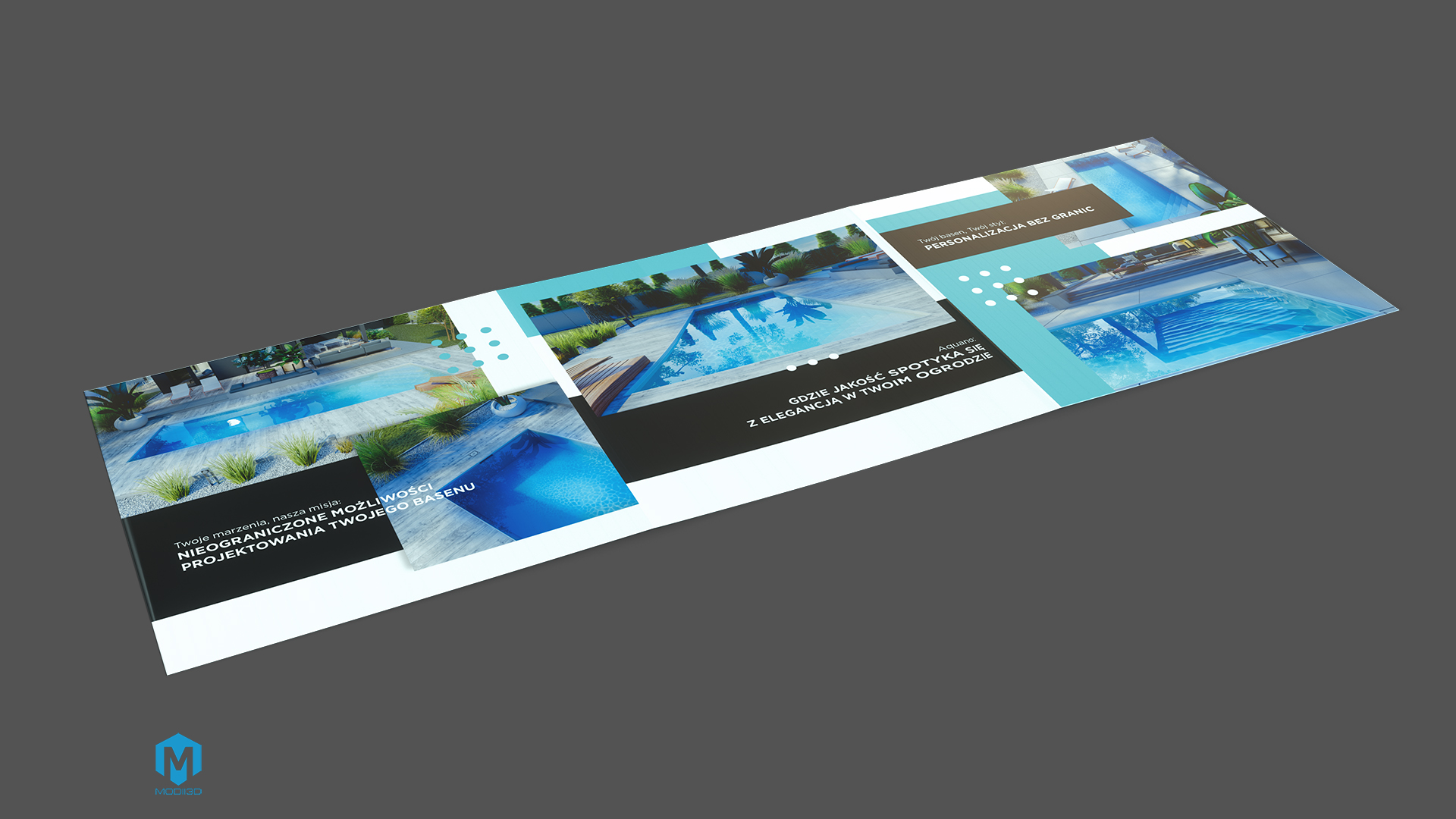
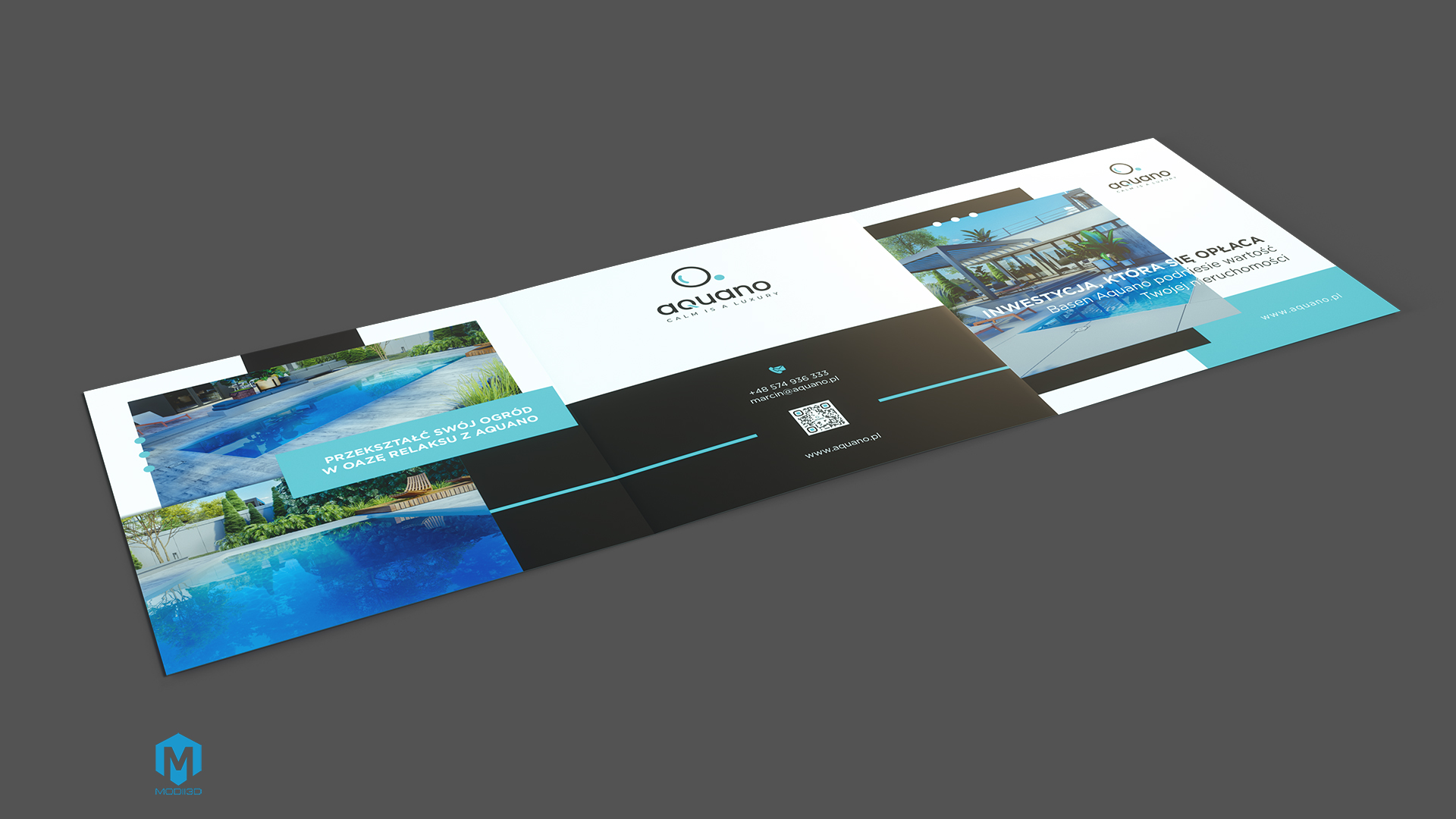
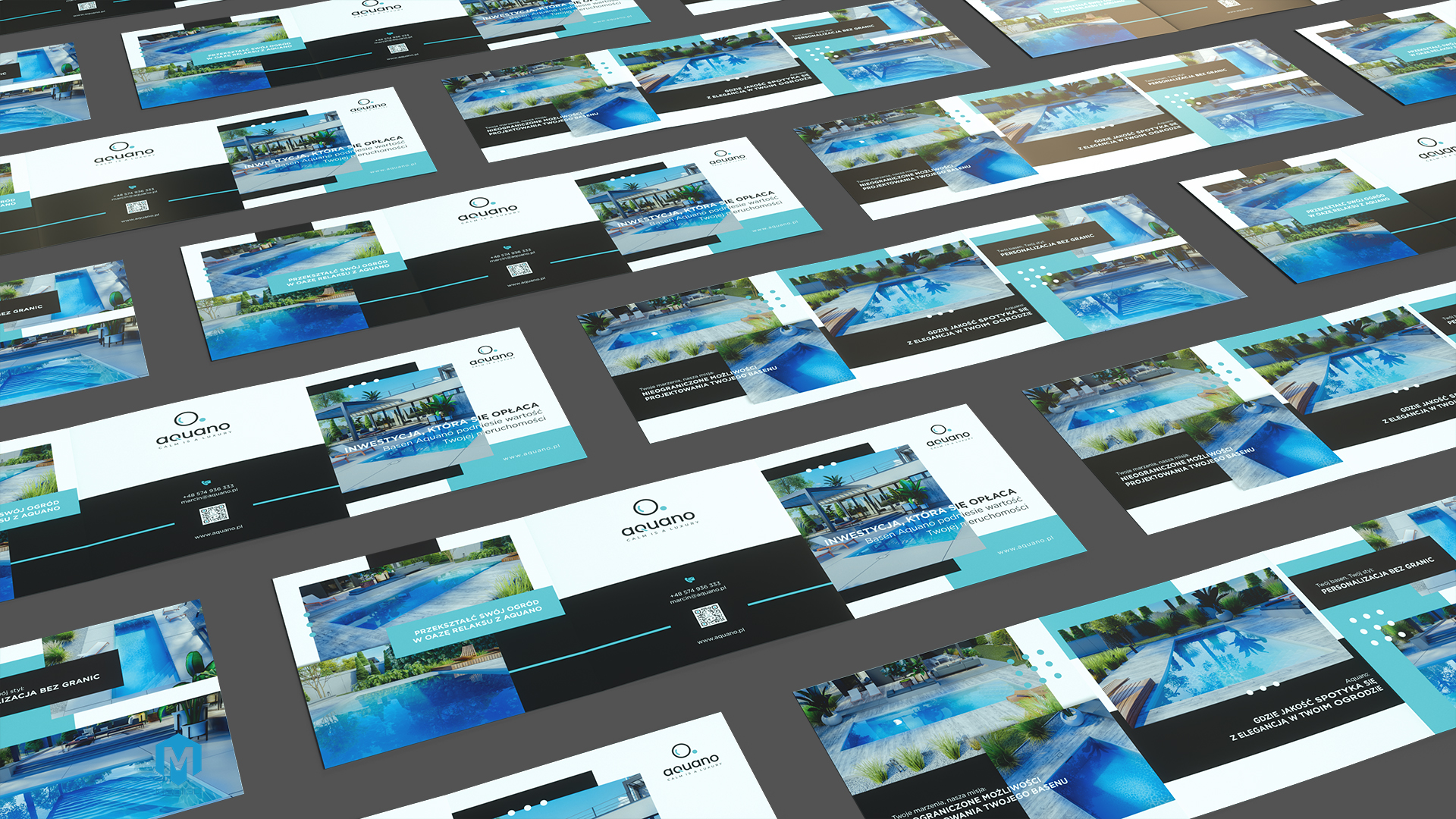
Comprehensive graphics implementation for the swimming pool manufacturer Aquano. Goal: Transform raw CAD models into photorealistic marketing renders (e-commerce) and precise technical visualizations for installation manuals. Additionally, geometrically flawless files were prepared for 3D printing of presentation miniatures.
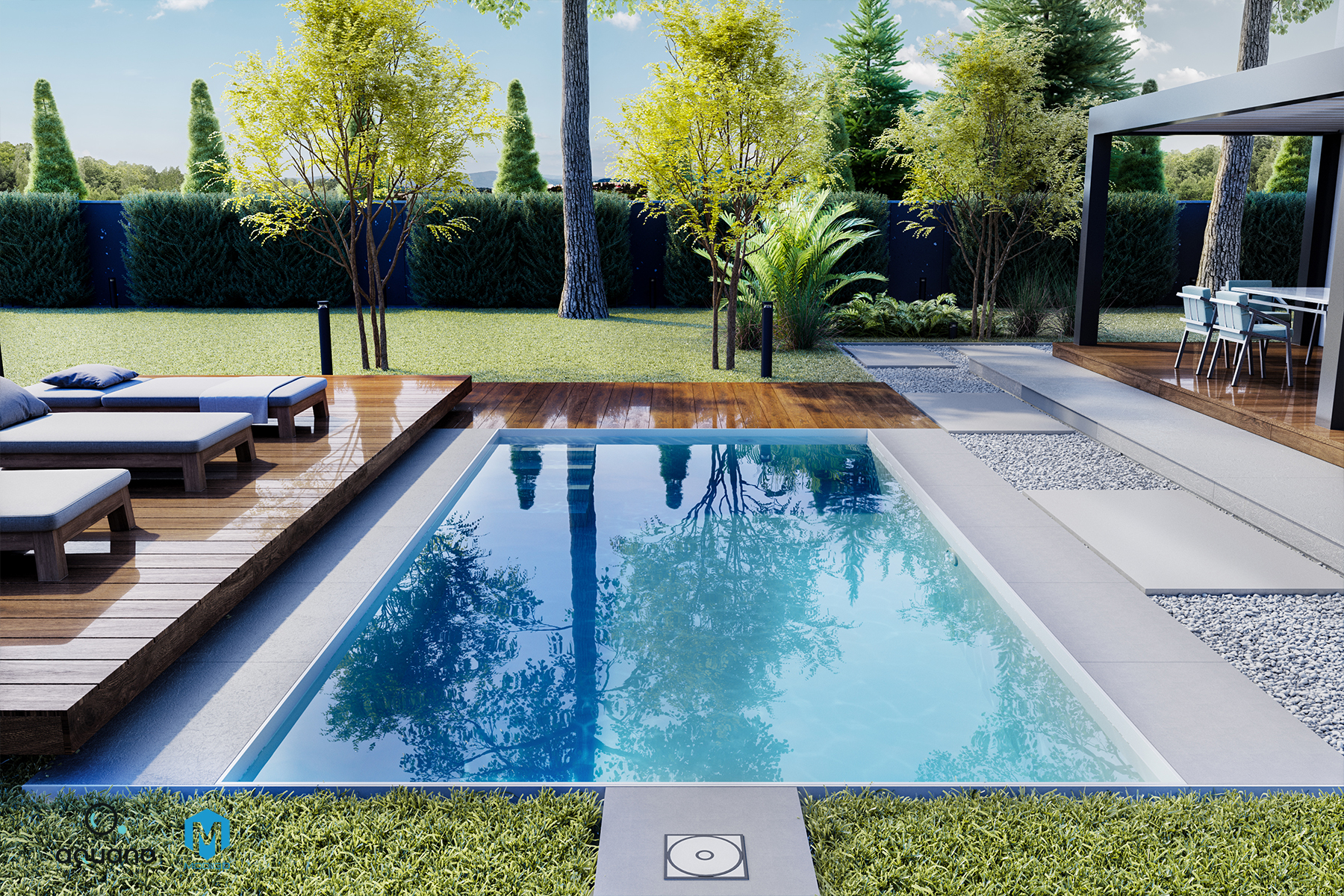
1. Business Context and Project Scope
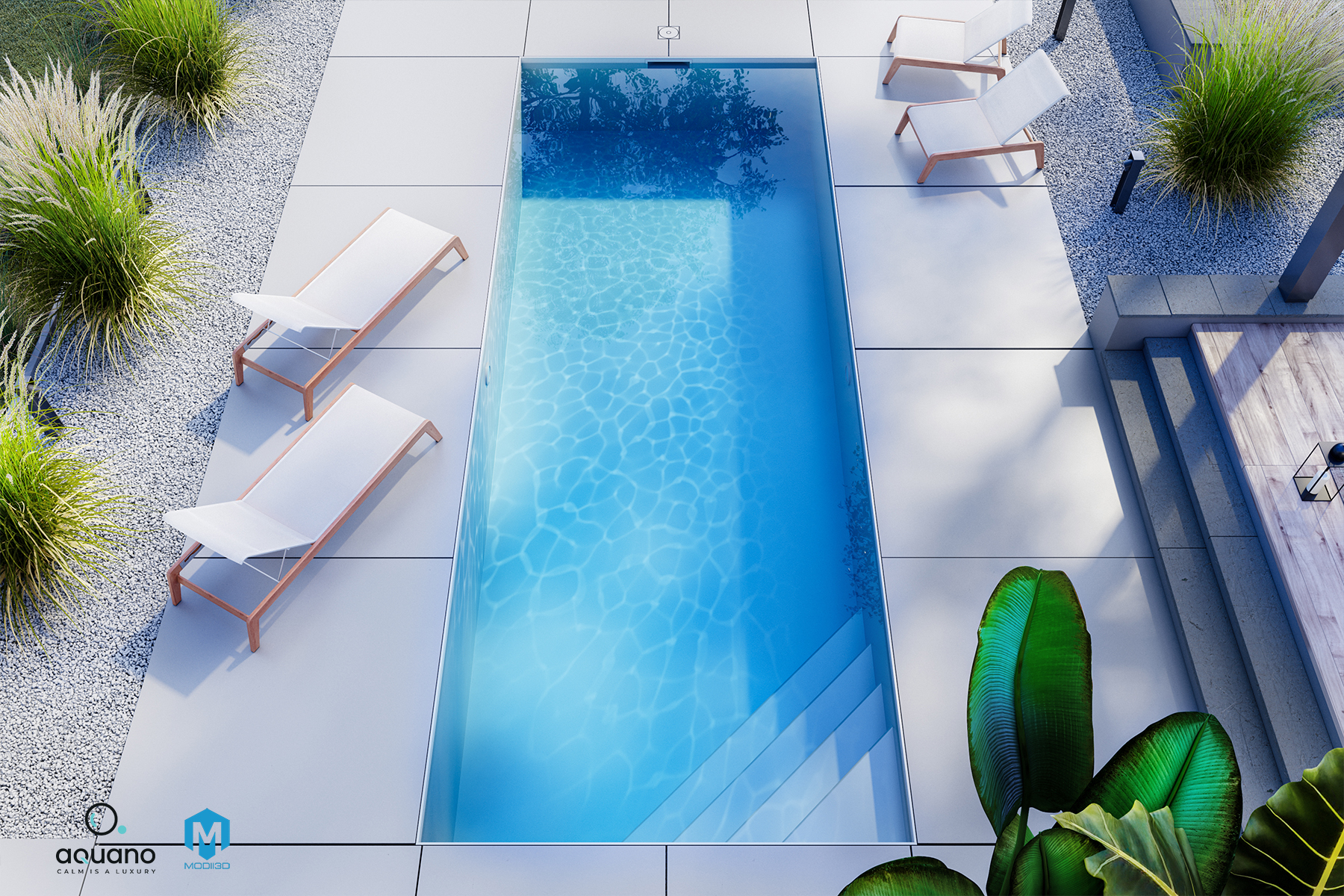
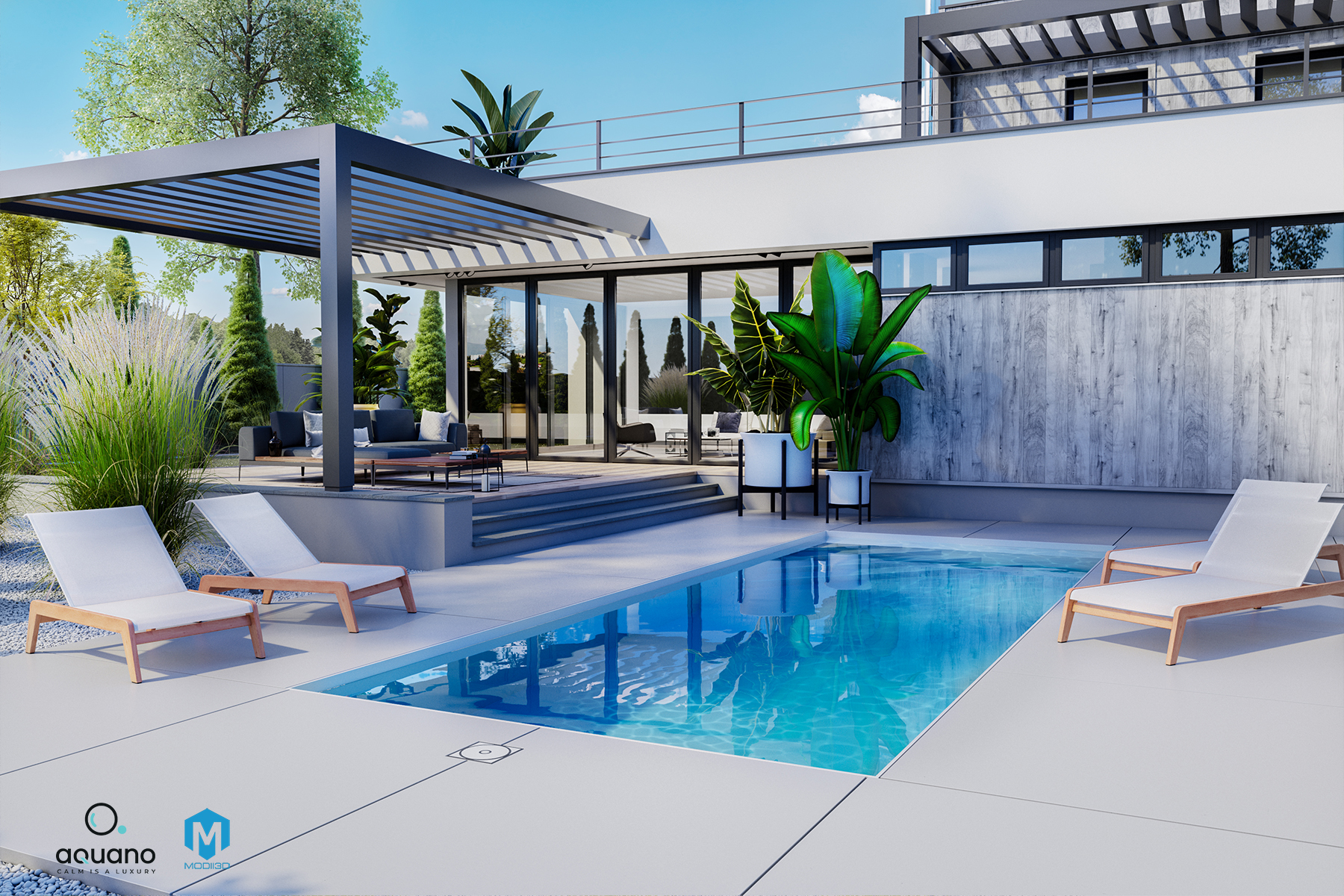
- Marketing rendering: Focused on maximum aesthetics, water photorealism, and recreating a luxurious environment.
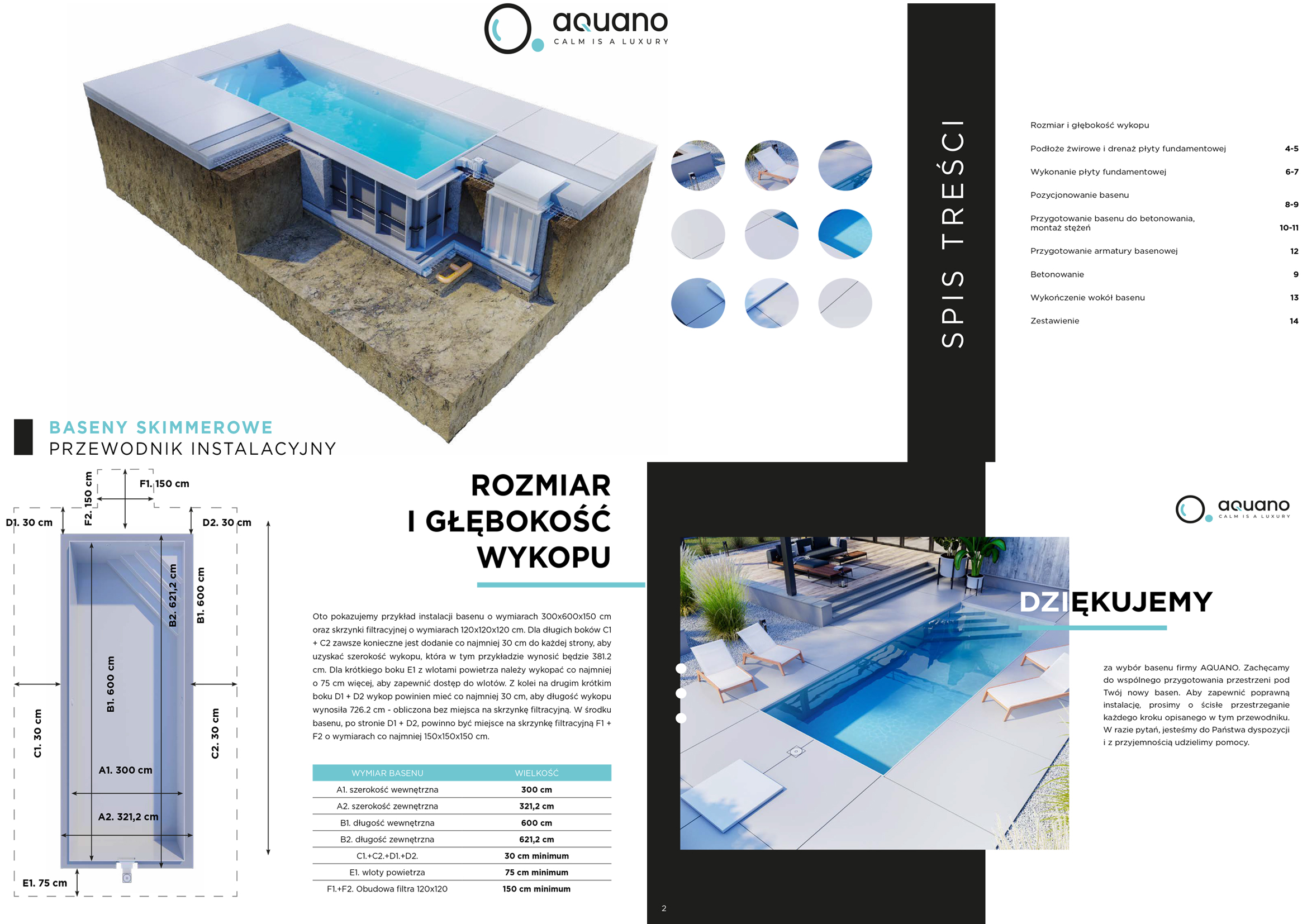
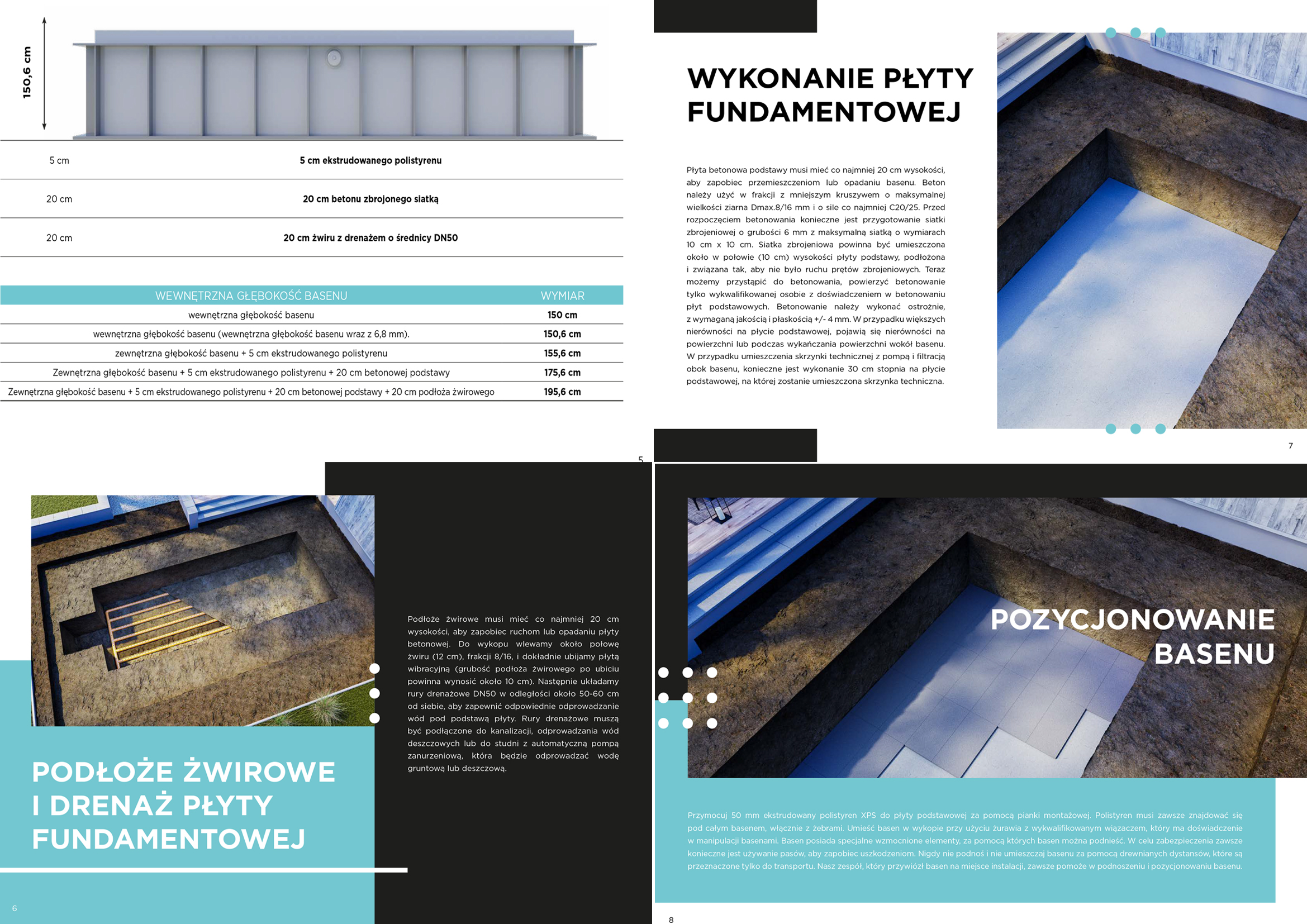
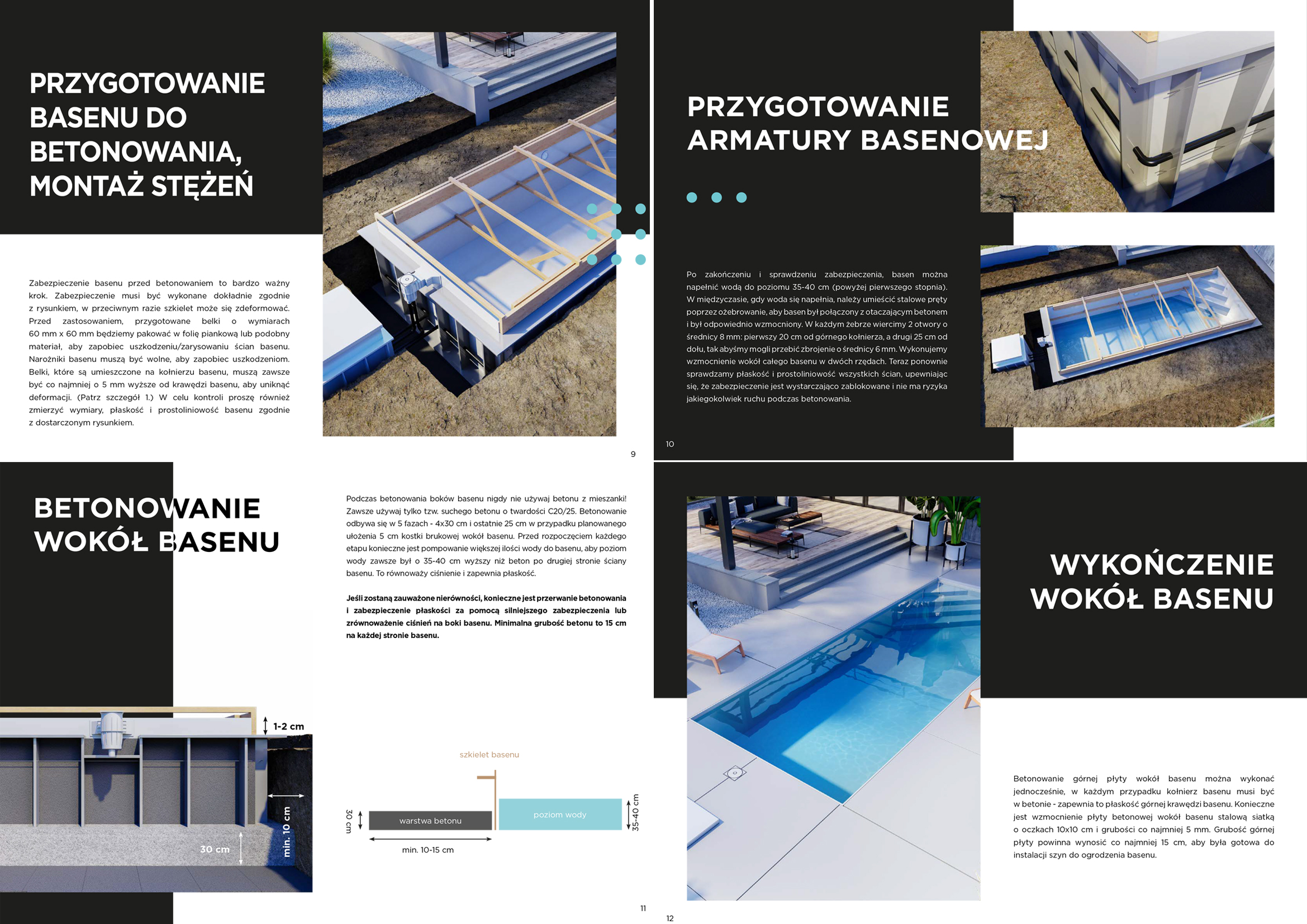
- Technical visualizations: Where the absolute priority was strict dimensional alignment with the manufacturer’s CAD documentation.
2. Engineering and Visual Challenges in the CGI Industry
- Water physics and optics: A flat, transparent surface looks artificial without advanced algorithms. Correctly configuring water shaders and replicating light refraction physics (caustics) was required to achieve natural light dispersion on the pool floor and refraction at the edges.
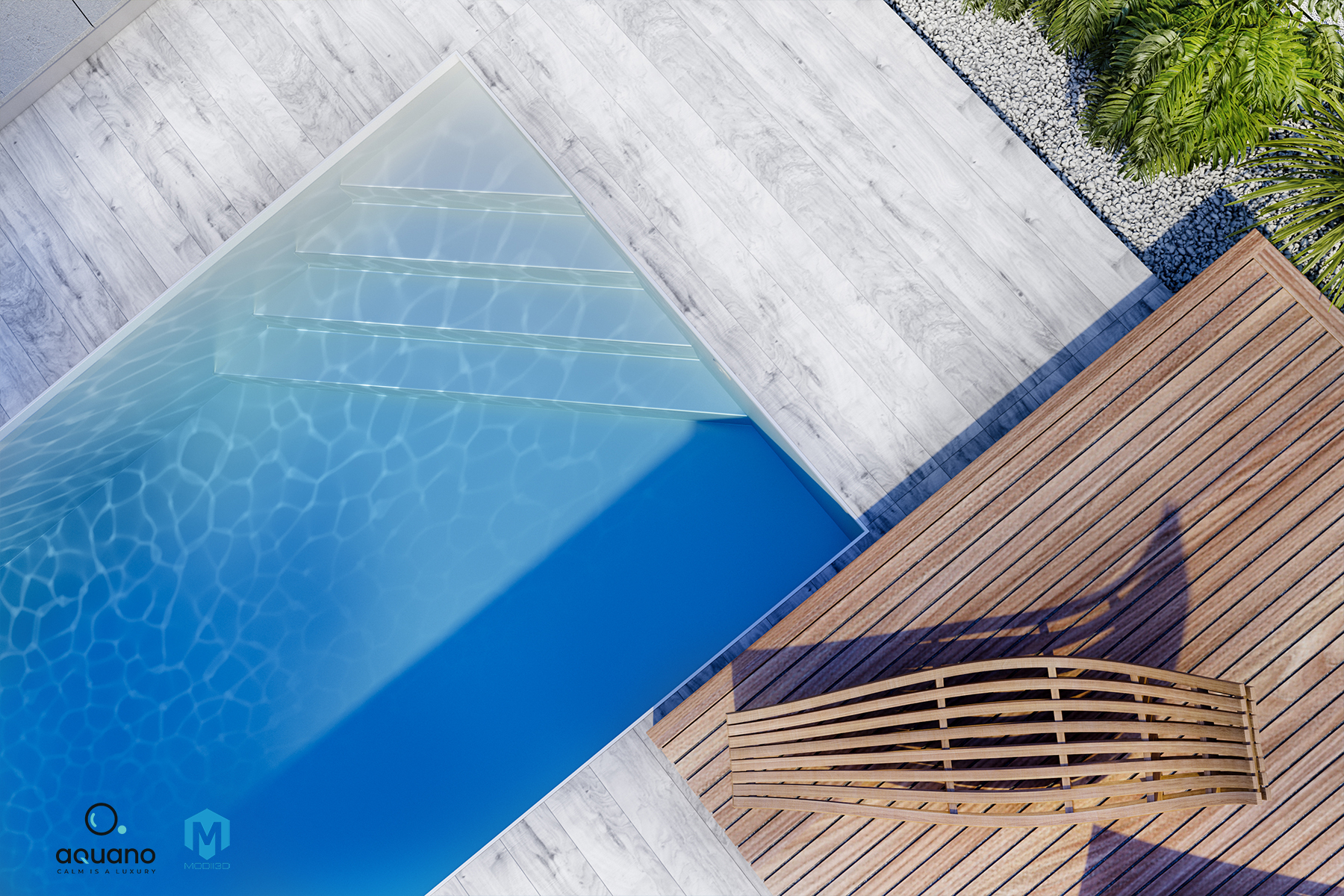
- Lining UV mapping: Mosaic and tiling patterns on the curved surfaces of the pool shell tend to stretch or repeat unnaturally. Any such artifact immediately ruined the photorealism in product close-ups.
- Uncompromising technical precision: When it comes to pool construction manuals, the margin for error is zero. Since the renders were delivered directly to the construction crews on site, the skimmer spacing, shell depth, and bottom plate attachment points had to align perfectly with the original CAD designs.


3. Technological Process and 3D Render Execution
- Geometry mesh retopology: Raw source models from CAD systems were optimized. We increased polygon density in areas with crucial details (plumbing, pool edges) while simplifying flat surfaces to optimize rendering time.
- HDRI environmental lighting: The scenes were set within meticulously selected HDRI maps (gardens, specific times of day), allowing us to achieve natural, soft shadows and organic reflections on the water.
- Dual-layer water shaders: We split the water’s behavior into a surface layer (responsible for Fresnel reflections and refraction) and a volumetric layer (responsible for generating the caustics effect on the bottom).
- Rendering engine (Path Tracing): For the calculations, we utilized an advanced engine operating in path tracing mode, which flawlessly calculates transparent materials while eliminating digital noise.
- 3D print preparation: The pool miniatures intended for sales representatives went through a separate geometry verification path for manifold parameters (no holes in the mesh, no inverted normals). The files were exported into geometrically flawless formats supported by FDM and resin printers.
4. Conclusions and Measurable Implementation Benefits
- Budget maximization: A single set of base 3D models was used to create the 3D visualizations swimming pools require for sales catalogs, installation manuals, and physical POS miniatures.
- Reduced Time-to-Market: Thanks to a standardized mesh structure, creating new color variants of the foil or mosaic patterns was limited solely to changing the UV mapping and textures, without the need to remodel the geometry.
- Reduction in complaints: Replacing complex 2D drawings with clear, technical 3D renders in the installation manuals drastically reduced execution errors. In the first quarter post-implementation, there was a noticeable drop in support tickets regarding the incorrect installation of skimmers or hydraulic lines.
FAQ – Frequently Asked Questions (3D Visualizations Swimming Pools)
What factors influence the price of 3D visualizations of swimming pools?
The cost depends primarily on three factors:
- The starting point (geometry source): If you provide production-ready CAD files, the workflow only requires retopology, texturing, and lighting. Building the structural geometry from scratch based on 2D blueprints will increase the budget.
- The number of variations: Additional colorways for pool liners or mosaic tiles utilize the same base mesh (only the UV mapping is adjusted), making them significantly more cost-effective than the initial render.
- The technical application: If the visual is intended for installation manuals, it requires a rigorous, millimeter-accurate cross-reference with the structural engineering designs.
What files do I need to provide to order 3D visualizations of swimming pools?
Solid-based formats like STEP or IGES are highly preferred because they preserve precise mathematical geometry. DWG files often contain only flat 2D layouts and are usually insufficient. If no 3D models are available, we can work from fully dimensioned technical drawings (including depth and plumbing inlet layouts) alongside material reference photos.
What is the difference between a marketing render and a technical visualization used in manuals?
- A marketing visualization prioritizes aesthetics and optimizing the mesh for faster render times under HDRI lighting—any geometry out of the camera’s view is simplified.
- A technical visualization must maintain absolute 1:1 dimensional accuracy with the original CAD files. Unnecessary mesh simplification in technical manuals could lead to critical mistakes on-site during skimmer placement or anchoring.
Why does the water in some pool renders look like glass instead of real water?
This happens when a basic, single-layer transparent shader is used, which completely bypasses physical realism. True-to-life water requires a combination of surface refraction (how light bends at the edges) and a volumetric medium to generate realistic caustics (the distinctive light patterns cast on the pool floor).
Why do mosaic tiles or liners sometimes look warped or stretched on curved pool stairs?
This is caused by poor UV mapping rather than an issue with the texture itself. A flat tile pattern must be digitally “unwrapped” onto the complex 3D curves of the pool shell or steps. If this step is rushed, the rendering software will warp, pinch, or stretch the pattern in the corners.
Which file format is needed to 3D print a pool model?
The go-to format is an STL file. However, simply exporting the file isn’t enough—the mesh must be completely manifold (a watertight solid with zero holes, intersecting faces, or flipped normals). Models built strictly for rendering often contain these structural issues, which is why our 3D-printing assets undergo a rigorous standalone geometry audit.
Can you create 3D visualizations of swimming pools without CAD files?
Yes, we can build them using detailed 2D architectural elevations, dimensions, and reference photographs. These renders are perfect for marketing, e-commerce, and product catalogs. However, they should not double as installation documentation, as they lack the millimetric engineering precision guaranteed by original CAD data.


If you want to learn more about the process of creating 3D materials, check out these articles:
· How to Prepare for a 3D Animation Project?
· What Are .STEP Files and How Do We Use Design Data in 3D Animations?
· Technical and Instructional 3D Animations
· 3D Animations in Advertising
Contact us to learn more!