


Project Presentations, Advertisment, 3D Animations

3D Animation of SUFC Industrial Cutting Tools for Sankyo Oilless
The cutting process happens inside the machine and lasts fractions of a second - a 3D animation lets you look inside and stretch it out in time.
Quick answer: for SANKYO OILLESS Industry GmbH we produced a 3D animation showing SUFC industrial cutting tools at work, used to cut car body sheet metal in the automotive industry. The material reveals a process that in reality takes place inside the machine and lasts fractions of a second – the cutting sequence, the way the sheet is supported, and the working line of the tools. The animation serves as a sales support tool for presenting the product to customers.
How do you show a process that happens inside a machine?
SUFC industrial cutting tools work somewhere you simply cannot look. The sheet metal cutting process takes place inside the workstation, in an enclosed space, and its key stages last fractions of a second. Even if you managed to place a camera in there, the footage would not show what matters most: the sequence of operations and the way the sheet is supported before the cut.
For the client, this was a concrete sales barrier. A product with a carefully thought-out design is hard to explain in words, and a technical drawing only speaks to an engineer. What was needed was material that would make the operating principle clear to a non-technical audience as well.
How was the SUFC cutting tool animation made?
The starting point was a CAD model supplied by the client, which we adapted for animation – production data needs preparation before it can go into a 3D scene. You can read more about this stage in our guide to STEP files.
Rather than reproducing the entire production workstation, we built a simplified, legible version of it. The surroundings were reduced to the elements needed to understand the process, keeping the viewer’s attention on the product itself.
To reveal the hidden process, we used three techniques:
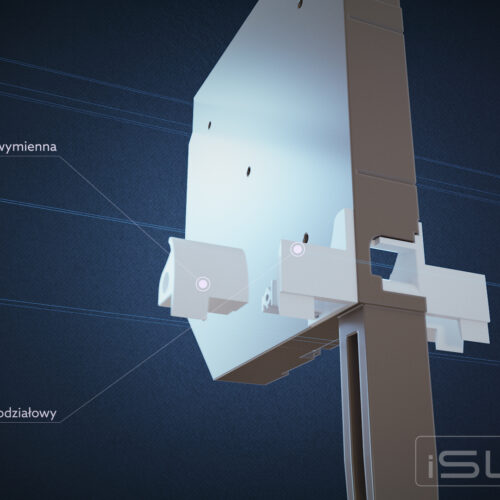
- Semi-transparent surfaces – letting you look inside the workstation and see the cutting line from within.
- Slow motion – stretching out operations that last fractions of a second so they become readable.
- Highlighting the sequence of operations – so the viewer understands not only what happens, but in what order.
The animation takes the viewer from the general to the specific: it starts with the product’s construction, moves on to the cutting sequence, and ends with a close-up showing how the sheets are supported. You can find more on preparing a project like this in our guide to 3D animation for businesses.



What did the 3D animation achieve?
- A complex product made understandable: the operating principle of the tools became clear even to viewers with no technical background.
- Sales support: the sales team gained a tool that explains the product faster and more effectively than technical documentation.
- Innovation brought to the surface: the material highlights design thinking that goes unnoticed on a static drawing.
- A lasting “wow” effect: a well-made animation sticks in the memory far longer than a catalogue or a slide deck.
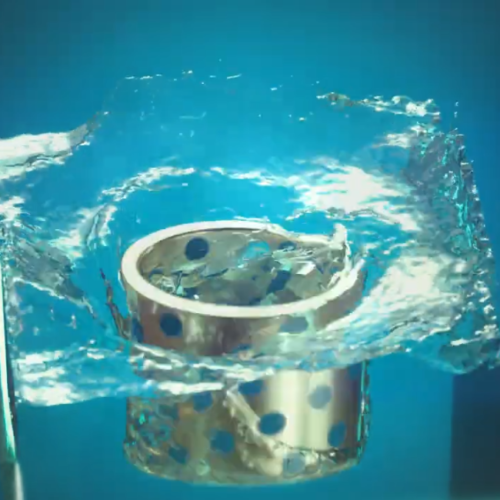
We create similar materials for manufacturers of components and tooling – take a look at our 3D animation and visualization offer for the automotive industry. We also produced a 3D animation of oilless sliding elements for Sankyo Oilless, showing the self-lubricating mechanism in water and high-temperature environments.
Frequently Asked Questions (FAQ)
What are SUFC industrial cutting tools?
They are cutting tools used in automotive manufacturing to cut car body sheet metal. Their design determines both the precision of the cut and the way the material is supported during the operation – two factors that decide the quality of the finished part.
Why did presenting this product call for a 3D animation?
The cutting process takes place inside the workstation and lasts fractions of a second, so it stays invisible to both the observer and the camera. A 3D animation lets us look inside using semi-transparent surfaces and stretch out the timing with slow motion – only then does the sequence of operations become readable.
What data was the animation based on?
The starting point was a CAD model supplied by the client, which we adapted for animation. Production data needs preparation before it can go into a 3D scene – we cover this in more detail in our guide to STEP files.
Why was the workstation simplified?
Reproducing the entire workstation faithfully would distract the viewer and make the process harder to follow. Reducing the surroundings to the essentials keeps the focus on the product and on how it works.
How much does a 3D animation of an industrial product cost?
The cost depends on how complex the geometry is, how many processes need showing, and how long the final material runs. We publish detailed price ranges and worked examples in our article How Much Does 3D Visualization and Animation Cost?
What is an animation like this used for?
Primarily as a sales support tool: in sales meetings, at trade fairs, in marketing materials, and in conversations with customers who have no technical background.
If you would like to know more about how 3D materials are made, take a look at these articles:
· What are .STEP files and how do we use design data in 3D animations?
· Technical and instructional animations
· How much does 3D visualization and animation cost?
Contact us to find out more!