


3D technical animation is a 3D film that shows how a machine, device or process is built, how it works or how it is assembled, including the parts you cannot see from the outside. We create it from the manufacturer’s documentation, most often CAD files in STEP format. Manufacturers use it in sales and at trade fairs, as animated assembly instructions or as training material. Our technical animation services include projects for AS Technik, Sankyo Oilless, Exme Berger and Niczuk.
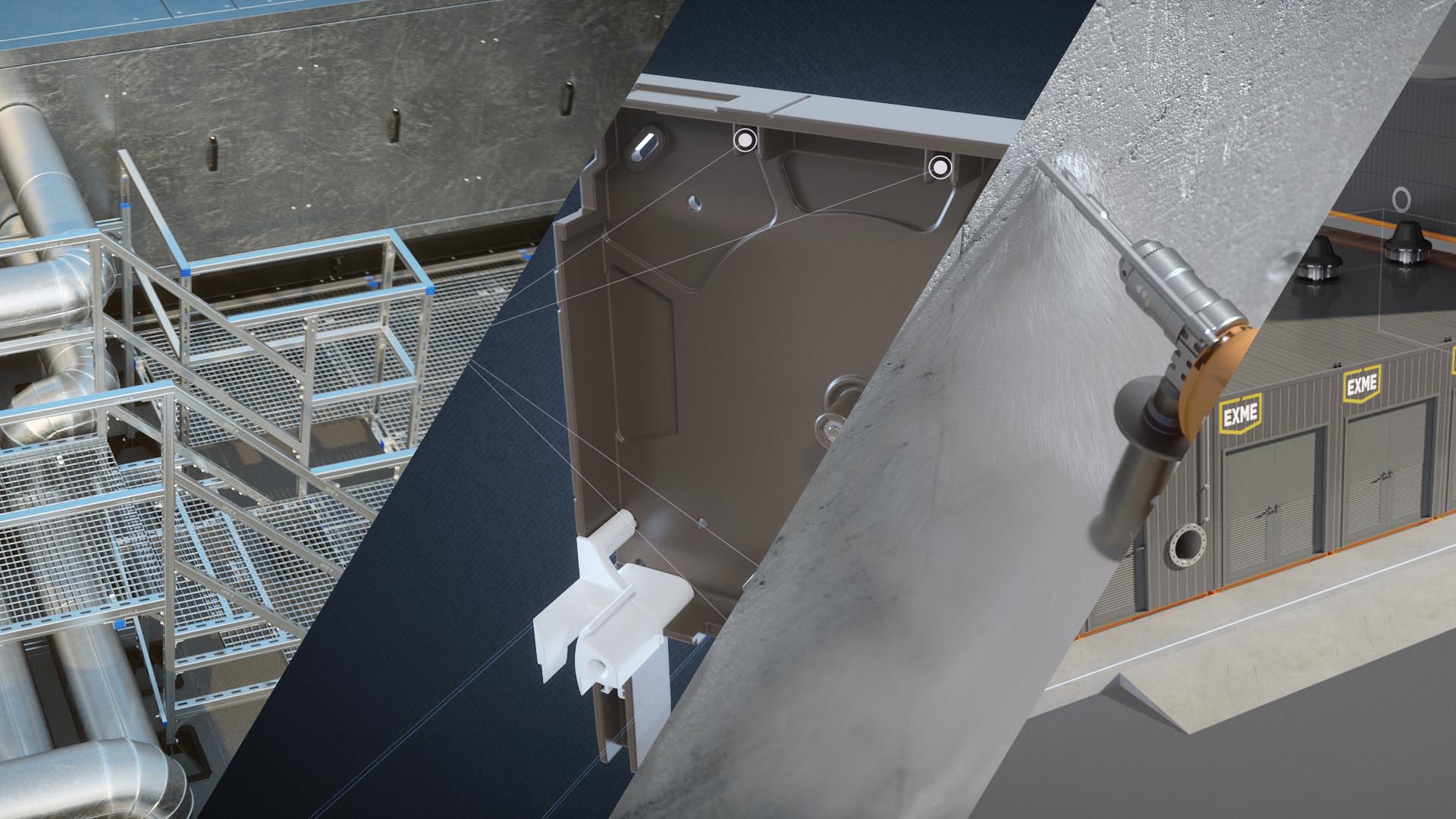
3D Technical Animation and Animated Assembly Instructions
3D animations from CAD files: how devices work, technological processes and assembly instructions.
What is 3D technical animation and how does it differ from instructional animation?
Technical animation answers the question of how something works: what happens inside a device, how a medium flows, in what order the components operate. Instructional animation answers the question of how to put something together: it shows the assembly steps, the fixing points and the most common mistakes. Both are made from the same 3D model, so one model can serve both purposes, as well as renders and frames for printed instructions.
How our clients use these animations:
- Sales and trade fairs: sales teams show how the product works at meetings and on the stand, and the animation also goes on the manufacturer’s website.
- Tenders and investor meetings: a technological process that cannot be filmed, shown step by step in a presentation.
- Assembly instructions: the animation replaces a PDF manual, and a version without voice-over or captions works in every market without translation.
- Training: material for installation and service teams that can be paused and replayed at any stage.
Technical animation is one of the types of animation we produce. Our full offer is described on the 3D Animation page, and our projects for plants and machine manufacturers on the 3D animation and visualization for industry page.




What can animation show better than a photo or a drawing?
A photo shows the housing, and a technical drawing speaks mainly to engineers. 3D animation lets you look inside a device, slow down time and show places a camera cannot reach. These are the techniques we use, with examples from our projects:
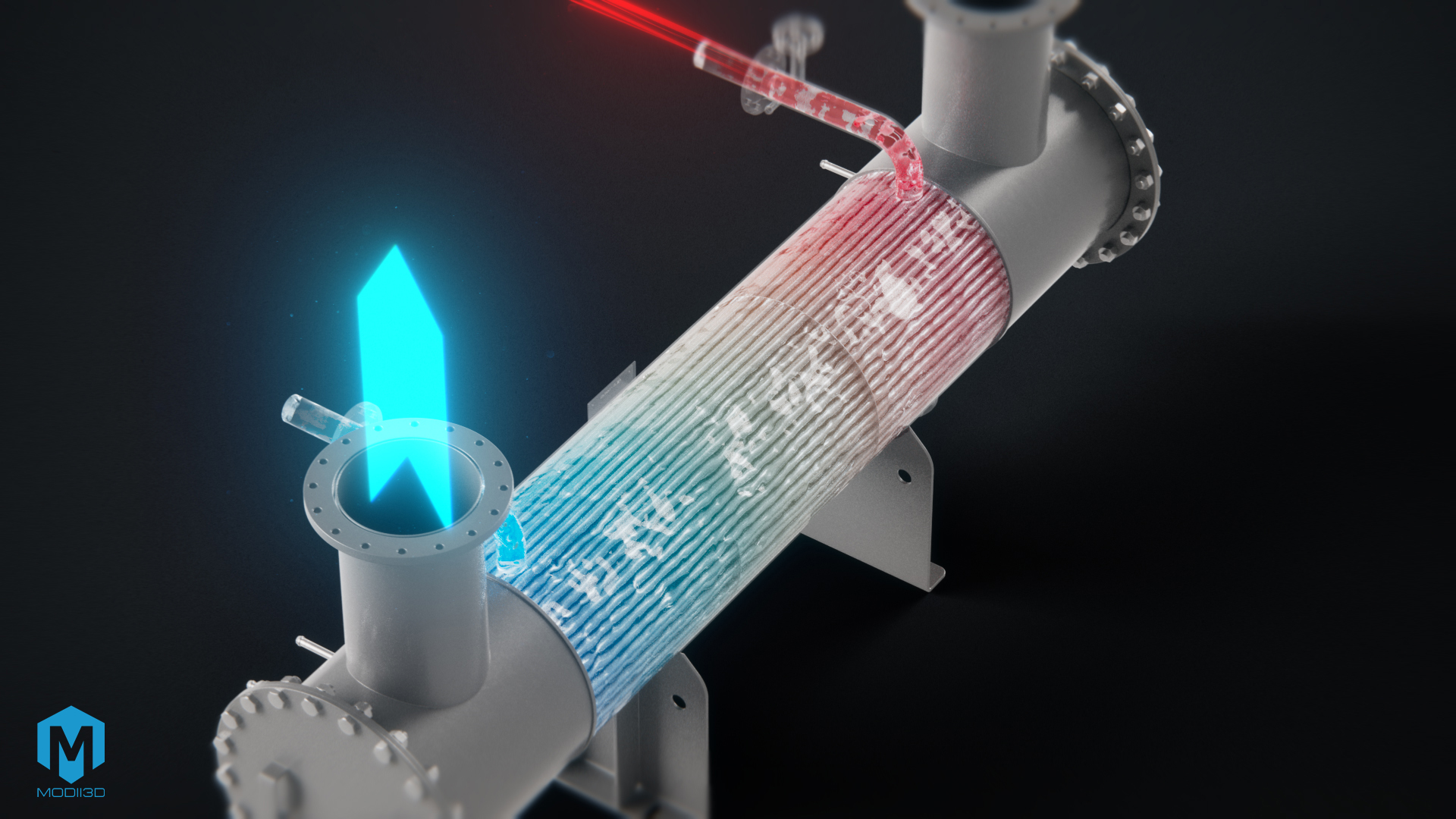
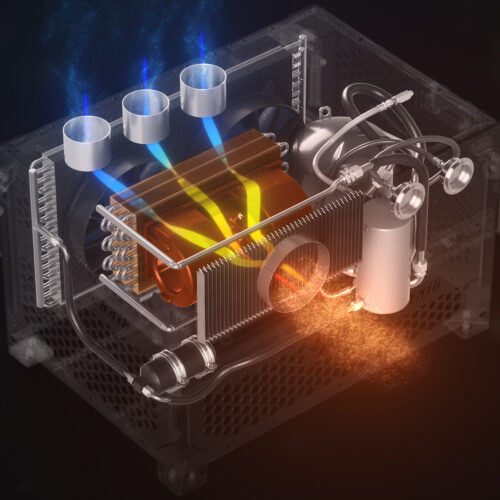
- Cross sections and X-ray views: the housing becomes transparent, so the viewer sees the inside of the device without losing sight of the whole unit. We show the flow of liquids, gases and air with particles, and temperature with colour. This is how we made the animation of an industrial cooler, heat exchanger and air conditioner for AS Technik.
- Semi-transparency and slow motion: cutting car body sheet metal takes a fraction of a second and happens inside the machine. In the animation of SUFC industrial cutting tools for Sankyo Oilless, selected surfaces are semi-transparent and slow motion stretches the operations in time, so the cutting order and the way the sheet is supported are visible.
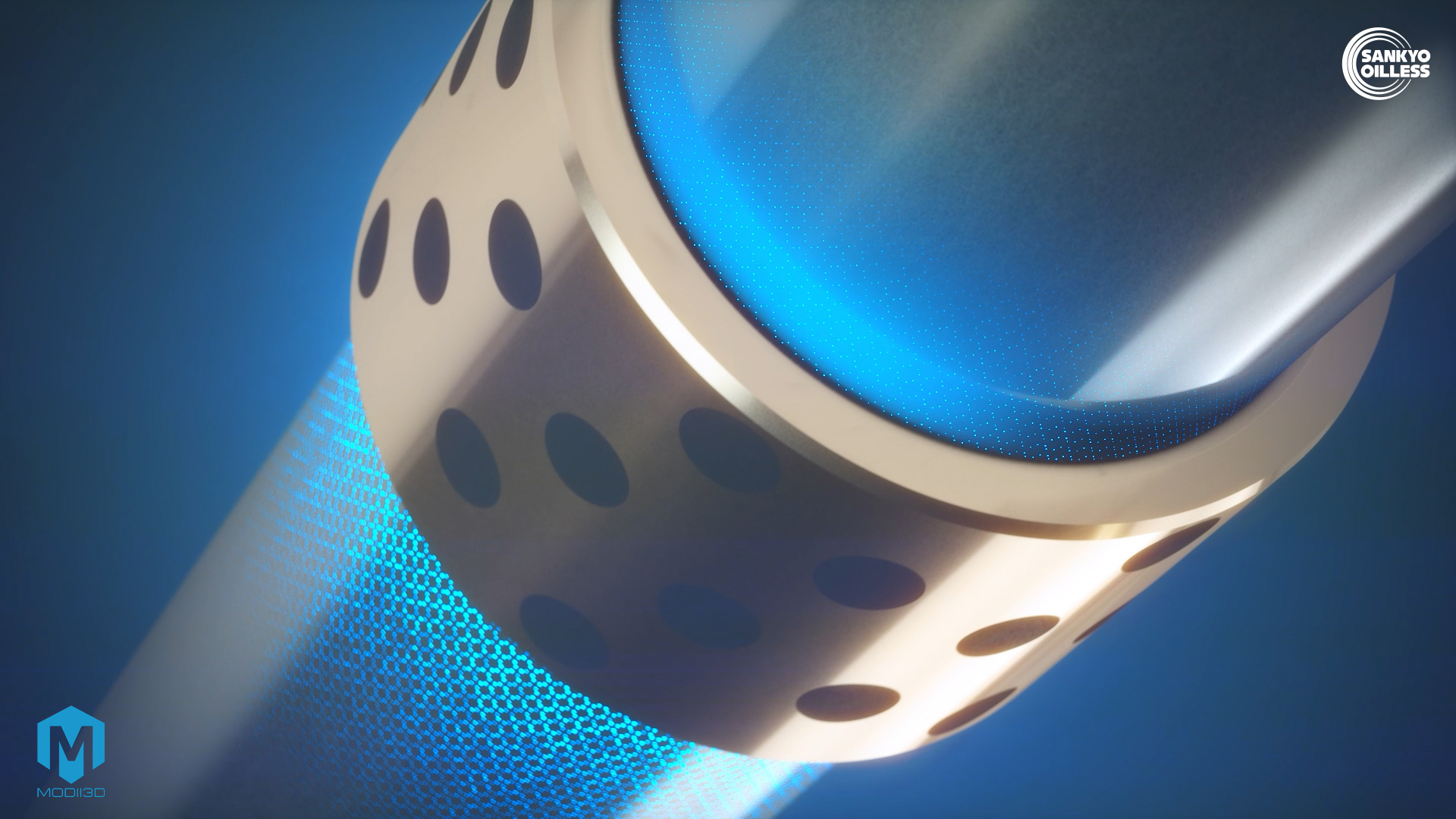
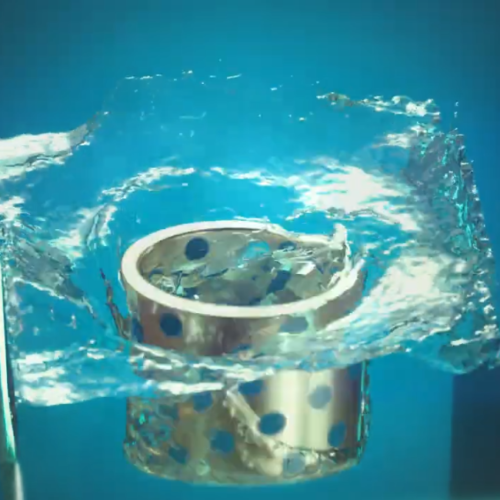
- Places a camera cannot reach: oilless sliding elements work under water and at high temperatures, and self-lubrication takes place on the contact surface between two parts. The animation of oilless sliding elements for Sankyo Oilless shows both the working environment and the mechanism itself.
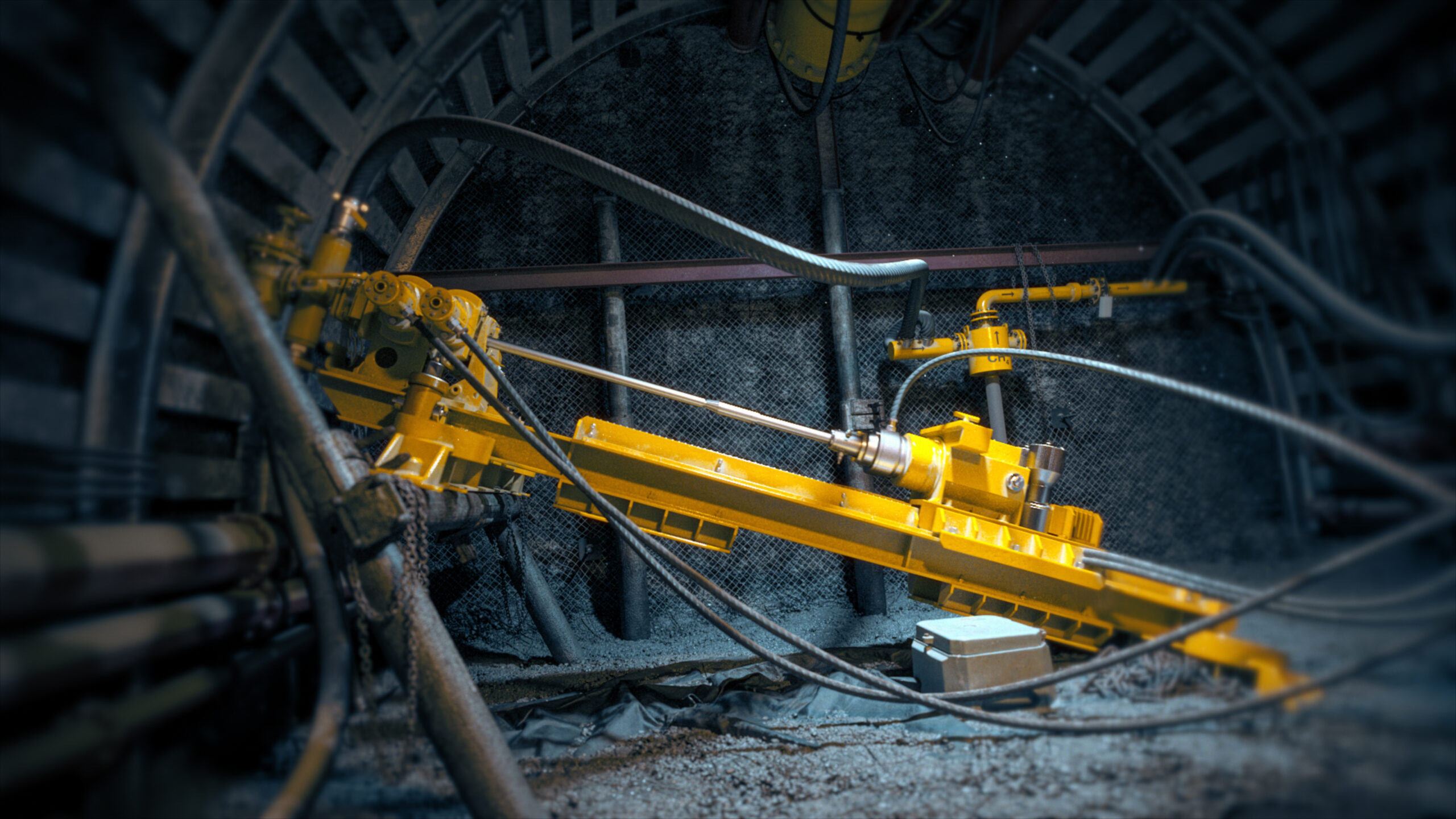
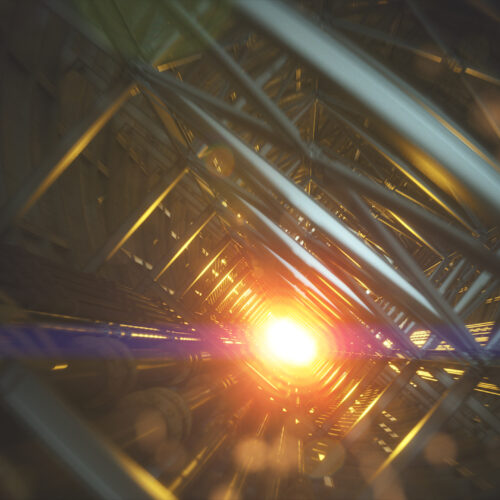
- A process broken down into stages: mine methane drainage takes place underground and inside closed pipelines. The animation for Exme Berger leads through the successive stages: from the mine working, through boreholes and methane transport by pipeline, to transmitting the gas to the surface and using it. The client uses it in tender presentations, among other things.
Animated assembly instructions instead of a PDF: how are they made?
A paper assembly manual is often a series of 2D diagrams from which the installer has to work out the order of steps alone. Animated assembly instructions show the same assembly plan in motion: step by step, with visible fixing points and the order of components. The film can be paused, rewound and replayed at any stage.
We start creating assembly instructions from the manufacturer’s assembly documentation: CAD files in STEP format or technical drawings. On this basis we build the 3D model and a script of the successive steps, and frames for printed instructions can be taken from the finished animation.
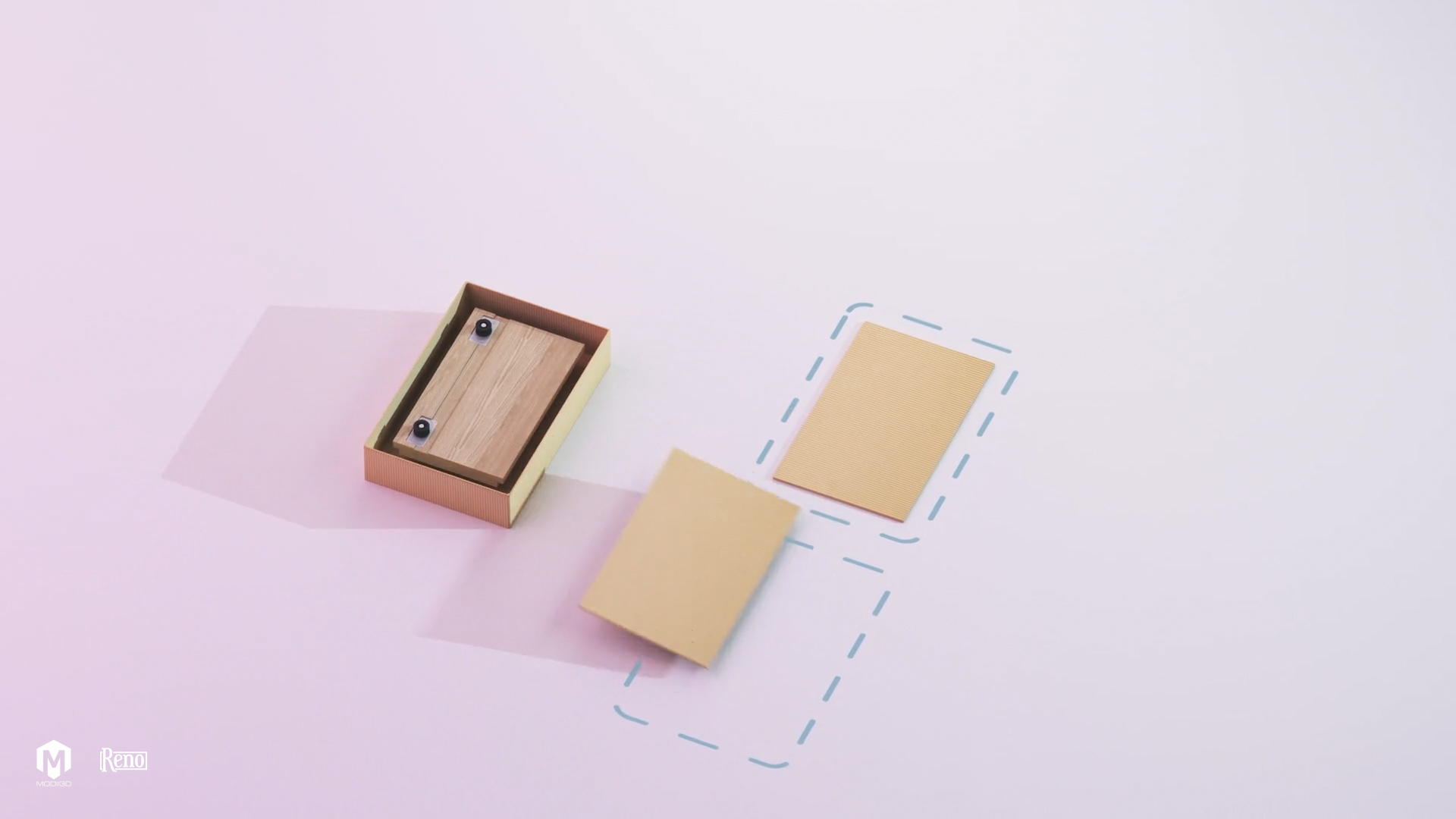
- For the sliding door manufacturer Reno we prepared assembly instructions without voice-over or text. Markings show correct and incorrect assembly, so the material works in every market without translation. Product renders were made from the same animation.
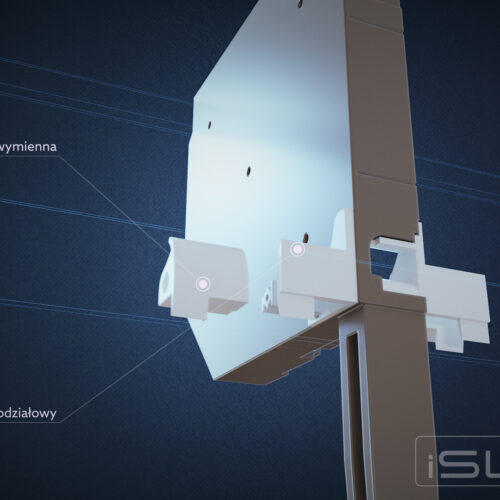
- For Protechnica we prepared an animation of mounting the iCover® side panel and the iSlide® slide, which replaced written instructions. It shows the order of components and the fixing points, so it also works as training material for installation teams.
- For the manufacturer Glassini we produced two sets of animated instructions: glass canopy assembly, which replaced a PDF manual, and SMART balustrade assembly with separate scripts for different construction variants.
- The animation of the Thale system by Niczuk shows step by step assembly on a technological roof, based on the manufacturer’s CAD files.
What is a 3D technical animation made from?
The best starting point is CAD files from the manufacturer’s design department, most often in STEP format, but also IGES, Parasolid or native files from CAD systems. With them, the 3D model reproduces geometry that matches the production version of the product rather than a simplification. We receive documentation after signing an NDA.
CAD files need to be prepared before they go into the animation: we remove geometry collisions, add missing elements and optimize the model mesh. Elements not covered by the documentation, such as the surroundings and the working environment of the device, we model from scratch. Details are described in our STEP files guide.
When there are no CAD files, we rebuild the model from 2D technical drawings, from photos and in some cases from a physical sample of the product. This extends the project and increases the risk of dimensional discrepancies, which is why we work from CAD documentation wherever possible. How to prepare for an order is described in our 3D animation guide for businesses.
Frequently asked questions (FAQ)
What is the difference between technical and instructional animation?
Technical animation shows how a device or process works, including what happens inside the housing. Instructional animation shows how to assemble or install a product, step by step. Both are made from the same 3D model, so one model can serve both.
Do I need CAD or STEP files for a technical animation?
They are not required, but they give the most accurate model and the most accurate quote. We accept STEP, IGES, Parasolid and native CAD files, among others. Without them, we rebuild the model from technical drawings or photos. Send your files for a quote through our contact form, we reply within 24 hours.
Can animated assembly instructions work without voice-over and translations?
Yes. The instructions can be built from visuals only: animated steps, arrows and markings of correct and incorrect assembly. This is how we prepared the sliding door assembly instructions for Reno. Such material is understood in every market without language versions.
How long does a technical animation take?
Usually from 3 to 8 weeks, counting from storyboard approval to delivery of the finished material. Shorter animations are closer to the lower end, while projects with many variants or photorealistic rendering need a longer schedule, which we agree before the start.
How much does a 3D technical animation cost?
Our animation projects start at EUR 1,500 net, and a typical technical animation costs between EUR 1,500 and EUR 4,500 net. The price depends mainly on the complexity of the geometry, the length of the material, the number of variants and whether you have CAD documentation. Example calculations are described in our article on 3D visualization and animation costs.